Why Schools Are Actively Searching for School Management Systems
Across Zimbabwe, schools are under increasing pressure to do more with less.
Headmasters are expected to oversee growing enrolments.
Teachers are expected to deliver quality education while managing heavy administrative workloads.
School Development Committees (SDCs) are expected to ensure transparency and accountability.
Parents want faster communication, accurate results, and convenience.
These realities are why many people now search online for a school management system — not because it is fashionable, but because schools need practical digital solutions that actually work.
School leaders increasingly rely on digital systems to improve management and decision-making.
What Is a School Management System?
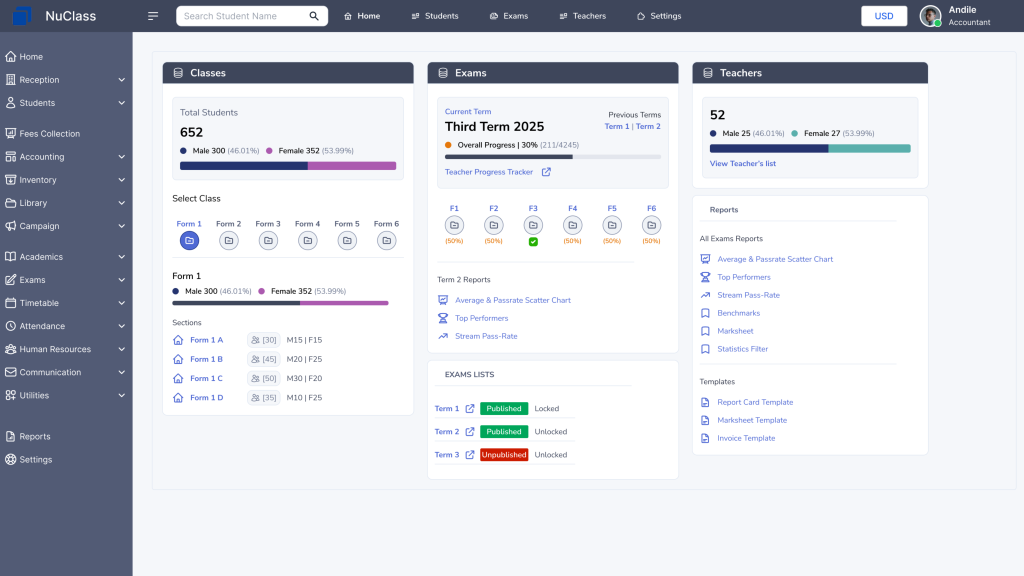
A school management system is a digital platform designed to help schools manage their academic, administrative, communication, and financial processes in one place.
A good system replaces:
- Paper attendance registers
- Manual marksheets
- Handwritten report cards
- Disconnected Excel files
- Endless phone calls and paperwork
With a central, secure, and easy-to-use digital system.
What Should a Good School Management System Be Like?
Before searching, it helps to understand what a good system should offer.
A reliable school management system should be:
- Easy for teachers to use
- Affordable for Zimbabwean schools
- Accessible on basic devices
- Able to work on weak or unstable internet
- Secure and compliant with data privacy
- Useful to administrators, teachers, parents, and learners
Once this understanding is clear, the right questions naturally follow.
The Most Important Questions to Ask When Searching for a School Management System

Below is a structured list of real search questions that different stakeholders should ask. These are written in natural language, exactly how people think and search.
1. General Questions Headmasters and SDCs Ask
These questions usually come first and shape the entire decision.
- What is the best school management system in Zimbabwe?
- Which school management system is suitable for Zimbabwean schools?
- What does a school management system actually do?
- Is a school management system worth it for a small school?
- What is the difference between free and paid school management systems?
- How much does a school management system cost in Zimbabwe?
- Which school management systems are used by other schools in Zimbabwe?
- What is the best digital school toolkit for schools?
- Can a school management system grow with my school?
- Are there locally supported school management systems?
2. Questions Teachers Ask Before Accepting a System
Teachers are the main users — if the system frustrates them, it fails.
- Will this system reduce my workload or increase it?
- Is the system easy for teachers to learn?
- How long does it take to capture attendance digitally?
- Can I enter marks quickly without errors?
- Does the system calculate totals and averages automatically?
- Can I generate report cards without rewriting everything?
- Does the system help with exam preparation?
- Can I access the system on my phone or laptop?
- Will the system help me save time?
- Is training provided for teachers?
3. Attendance and Classroom Management Questions
These questions focus on daily school operations.
- How can we record student attendance digitally?
- Is there an automatic attendance system for schools?
- Can attendance be tracked per class and per student?
- Can we generate attendance reports easily?
- What is the easiest way to record attendance?
- Can attendance data be analysed over time?
- Does the system work even when internet is weak?
4. Exams, Marks, and Results Management Questions
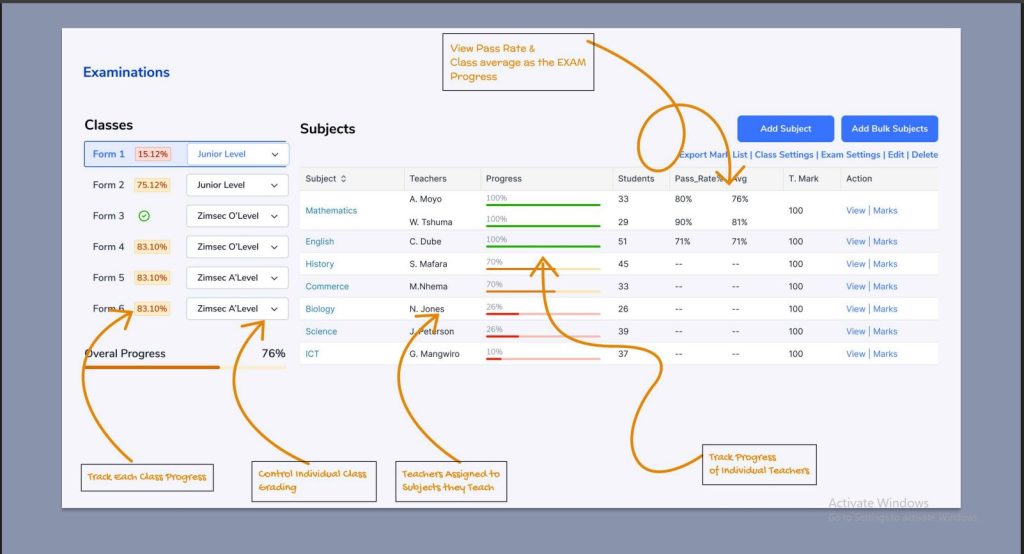
Marks management is one of the biggest pain points in schools.
- How can teachers enter marks online?
- Is there a system for managing exam results?
- Can the system prevent marks calculation errors?
- Does it support multiple exams and terms?
- Can subject averages and pass rates be calculated automatically?
- Is there a marksheet software designed for schools?
- Can the system handle large classes?
- Can we export or print results if needed?
5. Report Cards and Performance Analysis Questions
These questions are critical during reporting periods.
- How can we generate report cards online?
- Is there report card software for schools?
- Can the system generate comments automatically?
- How does AI help with report writing?
- Can teachers edit AI-generated comments?
- Does the system analyse class performance?
- Can we see pass rates and subject averages?
- Is there a dashboard for student performance?
- Can weak and strong areas be identified easily?
6. Parent Communication and Engagement Questions
Parents increasingly expect digital access.
- How can parents view results online?
- Is there a parent portal for schools?
- Can parents receive reports on their phones?
- How does the system communicate with parents?
- Can schools send notifications digitally?
- Will parents need smartphones or basic phones?
- Is parent access secure?
- Can parents see attendance records?
- Can schools reduce phone calls and paperwork with parents?
7. School Administration and Record-Keeping Questions
Administrators and SDCs often focus here.
- How can we store student records safely?
- Can the system manage teacher information?
- Is there a student information system included?
- Can we avoid losing records when staff change?
- Does the system keep historical data?
- Can records be accessed years later?
- Is data backed up automatically?
8. Timetabling and Scheduling Questions
Timetabling is complex and time-consuming.
- Is there timetable creation software for schools?
- Can teacher schedules be managed digitally?
- Can classroom allocations be automated?
- Can changes be made easily mid-term?
- Does the system avoid timetable clashes?
9. Fees and Financial Management Questions
These questions are especially important for SDCs and school administrators.
- Is there a school fees management system?
- Can the system track payments per student?
- Can invoices be generated automatically?
- Does it support online school fees payment in Zimbabwe?
- Can it integrate with local banks?
- Can we see outstanding balances easily?
- Can parents receive fee statements digitally?
- Does the system improve financial transparency?
10. Internet, Devices, and Infrastructure Questions
Zimbabwean schools must think realistically.
- Does the system work on weak internet?
- Can the system work offline?
- Is it cloud-based or locally hosted?
- Can it run on basic computers?
- Is there a mobile app for school management?
- Can it be used on phones and tablets?
- Does it support Starlink or other internet solutions?
11. Questions Specific to Different Types of Schools
Different schools have different needs.
- Is this system suitable for primary schools?
- Does it support secondary school structures?
- Can boarding schools use it effectively?
- Is it suitable for rural schools?
- Does it work for private schools?
- Can government schools use it?
- Is it flexible enough for different school models?
12. Zimbabwe-Specific Questions Decision-Makers Ask
Local relevance matters.
- Is the system designed for Zimbabwean schools?
- Does it support local curricula and reporting styles?
- Is local support available?
- Is training done locally?
- Does it align with Education 5.0?
- Can it support Vision 2030 goals?
- Are there local case studies or users?
13. AI and Future-Focused Questions
Forward-thinking schools ask these.
- How is AI used in school management systems?
- Can AI help teachers write comments?
- Can AI analyse school data?
- Will AI reduce administrative work?
- Is AI safe to use in schools?
- How will AI improve teaching and learning?
14. Security and Data Protection Questions
Trust is critical.
- Is the school management system secure?
- How is student data protected?
- Who has access to sensitive information?
- Are backups done automatically?
- Can data be recovered if something goes wrong?
- Does the system comply with data privacy principles?
15. Problem-Based Questions That Drive Action
These are high-intent questions that usually lead to adoption.
- How can we reduce paperwork at school?
- How can we stop losing student records?
- How can we simplify school administration?
- How can we avoid errors in report cards?
- How can we send reports to parents digitally?
- How can we manage teachers and students in one system?
- How can we digitalise our school step by step?
- How can technology improve school efficiency?
Final Thought: Asking the Right Questions Leads to the Right System
Choosing a school management system is not about software alone — it is about solving real school problems.
When headmasters, teachers, SDCs, and parents ask the right questions, they are far more likely to choose a system that:
- Fits their school
- Supports their teachers
- Serves their parents
- Protects their data
- And prepares their school for the future
One of the platforms that often comes up during this evaluation process is NuClass, a locally developed digital school toolkit designed to support core school operations in a practical and structured way. NuClass focuses on areas that schools frequently struggle with, including fees collection, invoicing, attendance management, marks capture, report generation, performance analysis, parent communication, and administrative coordination. Its approach emphasises ease of use, gradual adoption, and alignment with Zimbabwean school environments rather than complexity.
By combining academic management, administration, analytics, and emerging AI-assisted features within a single platform, NuClass reflects the direction many schools are moving toward as they modernise their systems. For schools reviewing available options, NuClass is one of the solutions worth examining as part of a broader decision-making process.
Globally and Locally, education systems are embracing digital transformation in education to improve efficiency, transparency, and learning outcomes.
8 Successful Steps to Digitalise your School in 2026